
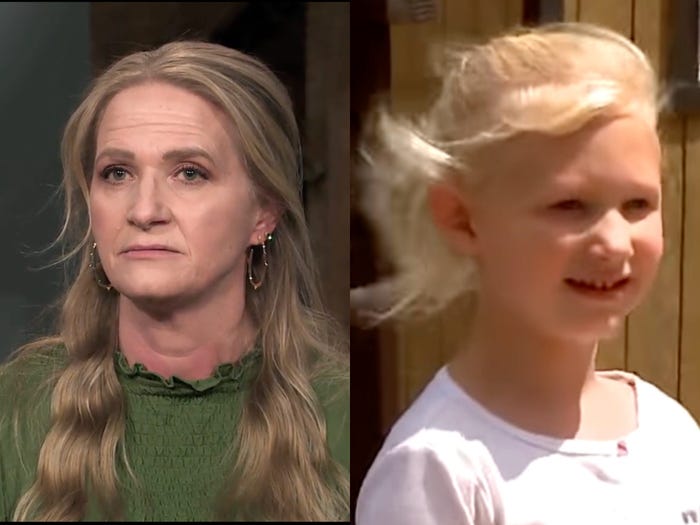
Sister Wives fans just exposed a brutal truth about Truly Brown… and it changes everything!
For years, viewers of the long-running reality series Sister Wives believed they were simply watching the complicated story of a plural family struggling to stay together. The arguments, the shifting loyalties, the emotional breakdowns, and the collapsing marriages became part of the show’s identity. Fans debated every episode online, choosing sides in family conflicts and analyzing every tense interaction between the adults. But now, a far more uncomfortable conversation has started taking over the fandom, and at the center of it is Truly Brown.
Longtime viewers remember seeing Truly grow up in front of the cameras from the moment she was born. Unlike the adults, she never chose to be part of reality television. She never agreed to have millions of strangers watching her childhood unfold. Yet for nearly two decades, audiences witnessed some of the most emotionally painful moments of her family life as if they were ordinary entertainment.
That realization is forcing many fans to rethink the entire legacy of Sister Wives.
At first, audiences focused mostly on the adults. The breakdown of Kody and Christine Brown’s marriage became one of the biggest storylines in the franchise. Viewers watched years of emotional distance, favoritism accusations, and growing resentment slowly destroy the family structure that once defined the show. As tensions increased, many fans noticed that Truly often appeared caught in the middle of emotional situations far too heavy for a child.
There were moments when cameras lingered on her expressions during family conflict, capturing confusion, sadness, and discomfort. Those scenes became memorable because they felt painfully real. While the adults argued about relationships, loyalty, and marriage, Truly was quietly absorbing the emotional fallout.
Fans reacted exactly how emotionally invested audiences usually react. Online discussions exploded with concern for her well-being. Reddit threads questioned whether certain scenes should have been aired at all. YouTube commentators dissected family interactions frame by frame, often focusing on how Truly seemed emotionally affected by the instability around her.
But that concern created a disturbing contradiction.
The same viewers criticizing the emotional exposure of a child were also helping fuel the popularity of the show itself. Every viral clip, every discussion thread, every emotional reaction increased attention around the series. The audience’s outrage became part of the engagement that kept the franchise alive.
That uncomfortable truth has become impossible for many fans to ignore.
The deeper people look at Truly Brown’s experience, the more they begin questioning the ethics of reality television involving children altogether. Unlike scripted child actors, reality TV children exist in a strange legal gray area. Most viewers assume there are strict protections preventing networks from exposing minors to emotionally damaging situations. In reality, those protections are often far weaker than people realize.
Traditional child actors work in controlled environments governed by labor laws, restricted hours, and financial safeguards. Reality television, however, frequently avoids those standards by claiming cameras are simply documenting real life instead of directing performances. That distinction may sound technical, but it changes everything.
Because Truly was not stepping onto a television set occasionally. Her actual home became the set.
The cameras followed everyday life as marriages collapsed, relationships fractured, and emotional confrontations intensified. There was no clear separation between private family struggles and commercial entertainment. The most vulnerable years of her childhood unfolded while producers captured footage designed to keep viewers emotionally invested.
That is the core issue now haunting the fandom.
Many fans have started realizing they were not simply witnessing a family documentary. They were participating in an entertainment system that turned deeply personal emotional experiences into profitable content.
The most difficult part for audiences to confront is that their emotional connection to Truly felt genuine. People truly cared about her. Viewers celebrated moments where she seemed happy and worried during periods when family tension became impossible to hide. But emotional concern alone did not protect her from public exposure.
Instead, her vulnerability often became one of the show’s strongest emotional anchors.
Reality television thrives on intimacy. It convinces audiences they personally know the people on screen. That emotional illusion becomes even more powerful when children are involved because viewers instinctively become protective. Producers understand this. Emotional attachment keeps audiences watching.
Over time, many fans began noticing how unusual the situation really was. Millions of strangers were discussing Truly’s emotional state despite never actually knowing her beyond edited television footage.
People analyzed her body language.
They debated whether she seemed neglected.
They interpreted facial expressions during tense scenes.
Entire online communities built emotional narratives around her childhood.
And yet, Truly herself had no control over any of it.
She could not approve what aired.
She could not prevent strangers from discussing her family life.
She could not erase painful moments once they became part of television history.
That lack of control is what many viewers now find deeply disturbing.
As the original generation of reality television children grows older, public conversations about long-term psychological effects are becoming more serious. Former participants from various reality programs have started speaking openly about anxiety, loss of privacy, identity struggles, and resentment over growing up under constant observation.

Some describe feeling trapped by childhood versions of themselves permanently preserved online.
Others explain how difficult it became separating their real identities from edited television portrayals consumed by millions.
Those conversations have forced audiences to revisit older shows like Sister Wives with entirely different eyes.
Suddenly, moments that once seemed like ordinary reality TV drama now feel far darker.
One major turning point for many viewers came during the final years of Christine Brown’s marriage to Kody. Over time, fans noticed a visible emotional shift in Christine’s priorities. Earlier seasons often showed her trying desperately to preserve the family structure despite growing unhappiness. But eventually, viewers began sensing that her focus had changed.
Instead of protecting the image of the plural marriage, she appeared increasingly determined to protect her children.
That shift became especially noticeable in her relationship with Truly.
Fans started seeing Christine prioritize emotional stability over maintaining appearances. Scenes involving Truly gradually carried a different emotional energy. Christine no longer seemed willing to tolerate an environment she believed was damaging for her youngest daughter.
When Christine finally decided to leave the marriage, many viewers described feeling relief rather than shock.
For some fans, it felt less like the destruction of a family and more like an attempt to rescue part of it.
The contrast became even more obvious after Christine began building a new life away from the original family structure. Audiences immediately noticed that scenes involving Truly appeared calmer and less emotionally strained.
For the first time in years, viewers saw moments that felt genuinely peaceful.
That emotional difference unintentionally revealed how tense the previous environment had become.
Fans celebrated seeing Truly appear more relaxed, more secure, and more emotionally comfortable. But even those positive developments carried another uncomfortable reality.
Her healing was still being filmed.
Her adjustment to a healthier environment was still content.
The same entertainment system that once documented painful family collapse was now documenting emotional recovery.

That paradox sits at the center of the current debate surrounding Sister Wives.
Can a child ever truly consent to growing up on reality television?
Many viewers now believe the answer is no.
A child cannot fully understand what it means to have their emotional development archived permanently online. They cannot predict how public exposure may affect future relationships, mental health, or personal identity.
And unlike ordinary childhood memories that gradually fade with time, reality television preserves vulnerable moments forever.
That permanence may be the most unsettling aspect of Truly Brown’s story.
Most people are allowed to outgrow childhood privately. Embarrassing moments disappear. Family conflicts fade into memory. Emotional reactions remain personal.
Reality television changes that completely.
For children raised on camera, painful experiences become permanent media archives replayed endlessly online by strangers. Every awkward interaction, every emotional reaction, every visible moment of sadness can be revisited years later.
Truly’s childhood is not simply remembered.
It is stored, analyzed, clipped, reposted, and discussed continuously.
That realization has changed how many fans view