
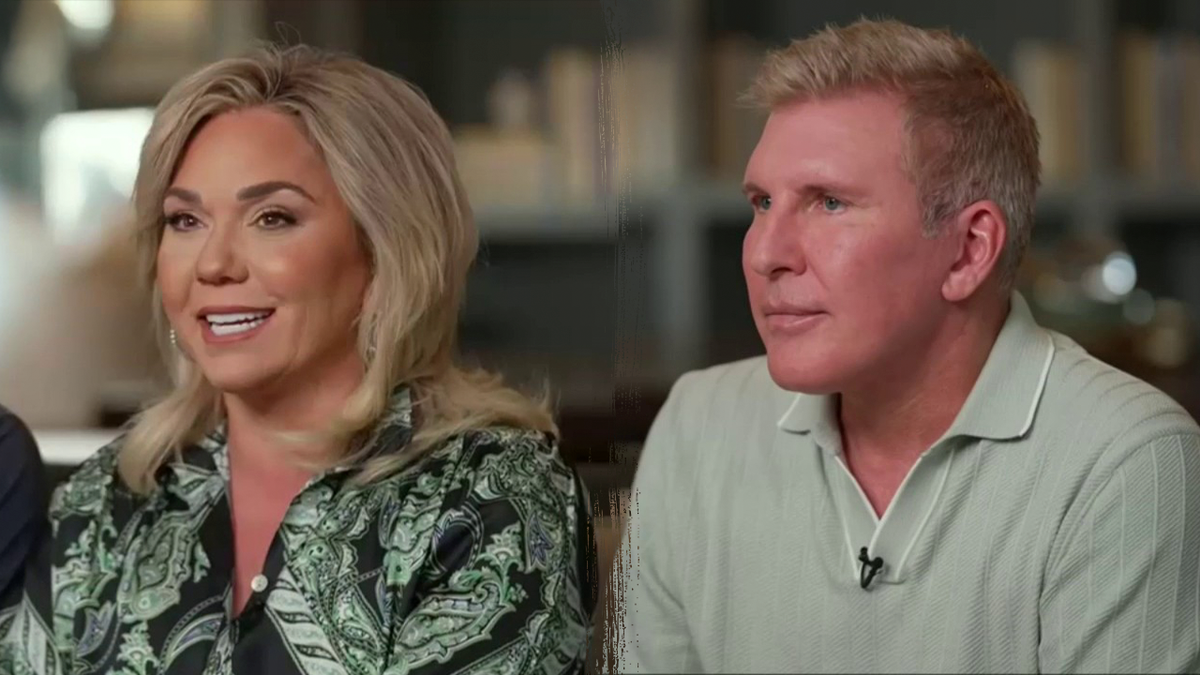
Exposed! Todd & Julie Chrisley’s desperate attempt to hide the shocking truth of their lawsuit
The legal troubles surrounding the Chrisley family have taken yet another dramatic turn, as a civil lawsuit connected to a 2022 vehicle accident has sparked
a heated dispute over transparency, privacy, and what information should be made available to the public. What began as a lawsuit stemming from
a traffic collision has evolved into a broader courtroom battle, with accusations flying from both sides and emotions running high.
At the center of the controversy is Patrick “Rick” Walder, the man pursuing legal action related to the accident involving Grayson Chrisley. Walder has publicly challenged efforts by Todd and Julie Chrisley to have portions of the case sealed, arguing that the family is attempting to keep important details out of public view. The dispute has generated intense interest among fans who continue to follow every development involving the famous reality television family.
The case originates from a November 2022 traffic accident on Interstate 65 in Tennessee. According to court filings, Walder alleges that Grayson Chrisley was involved in a rear-end collision while driving a pickup truck reportedly owned by his parents, Todd and Julie Chrisley.
The lawsuit claims that Grayson was distracted and failed to maintain appropriate driving conditions before the collision occurred. Court documents reportedly allege that he did not maintain a safe following distance and failed to operate the vehicle in a manner consistent with roadway conditions.
The accident itself drew attention at the time because Grayson was reportedly transported to a hospital following the crash. Although concerns initially centered on his health and recovery, the legal ramifications of the incident have continued to unfold long after the physical aftermath faded from the headlines.
What appeared to be a relatively straightforward civil case has since transformed into a much larger legal confrontation involving subpoenas, privacy concerns, and competing narratives about public accountability.
One of the most contentious chapters in the lawsuit involved requests for phone records.
Walder sought access to communication records that could potentially shed light on events surrounding the crash. According to reports, he requested call and text logs covering a period before and after the accident.
The Chrisley family’s legal team pushed back strongly against those requests, arguing that they were overly broad and amounted to harassment rather than legitimate discovery efforts.
The disagreement eventually led to negotiations between the parties.
A compromise was reportedly reached, allowing access to a narrower range of records. Under that arrangement, Grayson’s phone records could be obtained directly, while any records involving Todd and Julie would be reviewed through their legal counsel before disclosure.
Although the phone-record dispute appeared to move toward resolution, it only set the stage for an even larger confrontation.
The latest flashpoint involves efforts to restrict public access to court filings and records connected to the lawsuit.
According to legal filings, Todd and Julie Chrisley’s attorneys argued that sealing portions of the case would help protect privacy interests and prevent unnecessary harm.
Their legal team reportedly maintained that the matter involved private family concerns and that public disclosure could lead to embarrassment and other negative consequences. The request also came as the Chrisleys continued navigating the aftermath of their highly publicized criminal convictions and subsequent legal appeals.
From the family’s perspective, protecting sensitive information appears to be a priority as they attempt to rebuild their lives under an intense media spotlight.
But Walder sees the situation very differently.
In a strongly worded response, Walder challenged the family’s request and questioned whether privacy was truly the motivation behind the effort.
His legal team argued that the Chrisleys have frequently discussed aspects of their personal lives in public forums, including interviews, podcasts, and social media posts. Because of that, they contend that sealing the case would be inconsistent with the family’s history of publicly addressing matters that attract public attention.
The argument struck a nerve among observers.
Critics of the sealing request have pointed to the family’s longstanding presence in reality television, where personal struggles, family conflicts, and private moments often became part of the public conversation.
Supporters of the Chrisleys, however, argue that appearing on television should not eliminate a person’s right to privacy in legal matters.
The debate has quickly expanded beyond the lawsuit itself, becoming a larger discussion about where the line should be drawn between public interest and personal privacy.
The timing of the legal battle could hardly be more challenging.
Todd and Julie Chrisley have spent the past several years at the center of intense public scrutiny. Their criminal convictions, prison sentences, and subsequent efforts to rebuild their lives have dominated headlines and fueled countless discussions among fans and critics alike.
Since their release and return to public life, the family has attempted to focus on healing and moving forward.
Savannah Chrisley has frequently spoken about the emotional toll the legal battles have taken on the family. Chase Chrisley and other relatives have also navigated life under a microscope while trying to maintain a sense of normalcy.
Now, this lawsuit threatens to reopen old wounds and place the family back in the center of another highly publicized courtroom dispute.
For a family already familiar with controversy, the latest legal clash presents yet another challenge.
Perhaps the most fascinating aspect of the case is the broader question it raises.
Should reality television stars be held to a different standard when it comes to transparency?
Those supporting Walder argue that public figures who build careers around sharing their lives cannot selectively decide when information should remain private.
Others insist that legal proceedings involving personal matters deserve protection regardless of a person’s celebrity status.
The court will ultimately decide whether the records remain publicly accessible or become shielded from broader scrutiny.
Until then, both sides appear firmly entrenched in their positions.
As the lawsuit continues moving through the legal system, fans are watching closely for the next development.
Will the court grant the request to seal portions of the case? Will additional documents become public? And could new information emerge that changes the trajectory of the dispute?
Those questions remain unanswered.
What is clear is that neither side appears willing to back down.
Walder has made it known that he intends to continue challenging efforts he believes limit transparency. Meanwhile, the Chrisley family’s legal team continues to argue that privacy protections are both appropriate and necessary.
The result is a legal showdown that has become about far more than a single accident.
For years, the Chrisley family entertained audiences with humor, family dynamics, and larger-than-life personalities. Today, however, they find themselves facing another serious legal chapter that could shape public perceptions for years to come.
Whether the court ultimately sides with the family’s privacy arguments or Walder’s push for greater transparency, the case has already captured public attention and reignited debate about fame, accountability, and the limits of public access.
As the battle unfolds, one thing is certain: this story is far from over, and every new filing is likely to generate fresh headlines in what has become one of the most closely watched legal disputes connected to the Chrisley family in recent memory.