
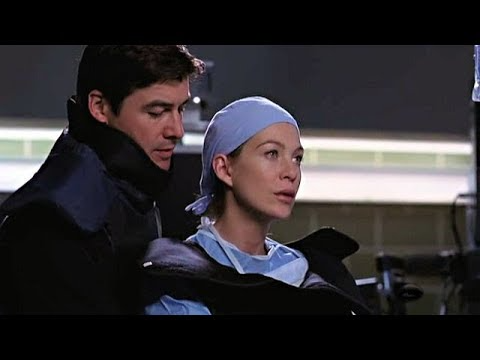
This Terrifying ‘Code Black’ Episode Secretly Defined the Future of Grey’s Anatomy!
In the modern television landscape, medical procedurals are frequently expected to deliver high-stakes, catastrophic events to disrupt the mundane rhythm of workplace romance and standard clinical diagnoses. Yet, few individual events have fundamentally altered the structural DNA of a long-running series quite like the legendary “Code Black” dual narrative arc in the second season of ABC’s Grey’s Anatomy.
Spanning Season 2, Episode 16 (“It’s the End of the World”) and Episode 17 (“As We Know It”), series creator Shonda Rhimes dismantled the conventional boundaries of medical dramas. By introducing an unexploded military weapon into an active operating theater, the series established a permanent precedent for catastrophic storytelling that would echo through later hallmark crises, such as the Season 6 hospital shooting and the Season 8 aviation disaster.
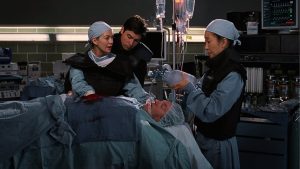
The crisis begins with the admission of a male patient suffering from bizarre, high-pressure traumatic injuries sustained while standing in front of a specialized weapon configuration. Paired with the patient is an inexperienced paramedic, Hannah Davies (portrayed by Christina Ricci), who has her hand inserted directly into the wound cavity to maintain physical hemostasis.
The clinical reality shifts from critical to catastrophic when Dr. Alex Karev discovers the true nature of the internal trauma: the weapon was an unexploded bazooka round lodged deep within the patient’s thorax.
Tactical intervention arrives via Dylan Young (Kyle Chandler), the decisive leader of the local bomb squad. As Young attempts to systematically anchor the panicking paramedic through the mechanical extraction process, the psychological pressure fractures the operating room’s stability. Hannah flees the room in a blind panic. In a split-second, instinctual reaction to save the room from immediate detonation, Dr. Meredith Grey steps forward and plunges her hand into the open chest cavity to secure the explosive device, triggering one of the most famous cliffhangers in modern television history.

The conclusion of the two-part arc centers on the psychological and physical isolation of Meredith Grey. Trapped by the literal weight of the explosive, Meredith faces the stark reality of her own mortality. To maintain her emotional focus, Dylan Young instructs her to project the identity of a calming, trusted presence onto him—evoking the mental image of Dr. Derek Shepherd.
The mechanical extraction itself is a masterclass in tension:
The sudden explosion kills Dylan Young and a secondary bomb squad member instantly, projecting a violent concussive wave back into the operating suite that knocks Meredith unconscious. The structural brilliance of the episode relies on prolonged narrative silence, forcing the audience to process the imagery of Meredith’s seemingly lifeless form before confirming her survival—though she remains deeply traumatized by the event.
The creative gamble of the “Code Black” arc paid massive dividends for the franchise, solidifying Grey’s Anatomy as a true pop culture juggernaut. Beyond securing a permanent spot among the highest-rated episodes of the series on consumer databases like IMDb, the two-part storyline garnered substantial critical acclaim from the Academy of Television Arts & Sciences.
The episodes earned multiple high-profile Primetime Emmy and Creative Arts Emmy Award nominations:
While none of the nominees took home the physical trophy during their respective ceremonies, the narrative formula established in these 100 minutes forever changed the parameters of network television. The DNA of this explosive arc can be seen directly in modern, high-intensity procedural thrillers like 9-1-1 and The Pitt, proving that when Grey’s Anatomy stepped outside the boundaries of standard medicine, it set a new gold standard for prime-time drama.