
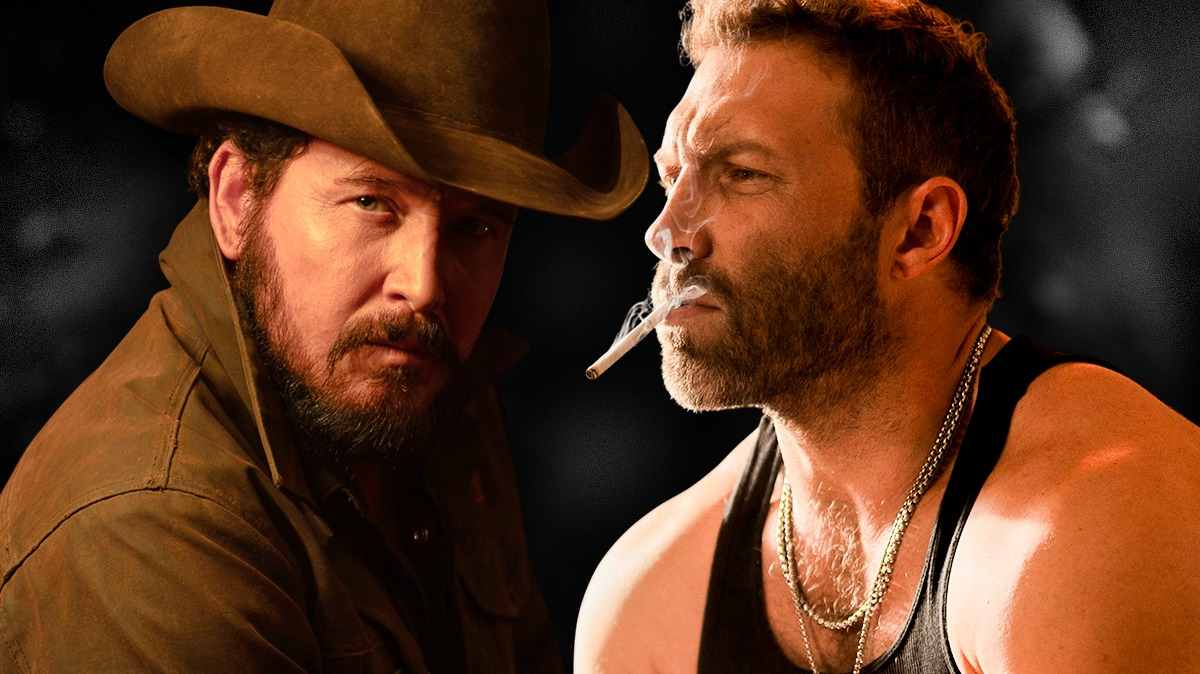
What Rip Actually Did To RobWill: The Shocking Dutton Ranch Ending Explained!
Dutton Ranch Episode 6 Ending Explained: What Really Happened After Rip Went to Meet Rob-Will?
Episode 6 of Dutton Ranch changes the direction of the entire story, not through what it reveals clearly, but through what it chooses to hide. On the surface, the episode seems to follow the familiar rhythm of ranch drama: rising tension, land disputes, cattle work, family pressure, and the constant threat of violence waiting just outside the frame. But underneath that familiar surface, something far more calculated is unfolding.
And the key to understanding it is Rob-Will.
After Rip Wheeler goes to meet Rob-Will, the episode refuses to give viewers the kind of direct aftermath they might expect. There is no explosive confrontation shown in full. No immediate retaliation. No dramatic reaction from Rob-Will. Instead, he disappears into silence. At first, that absence may feel like a gap in the storytelling, but it is actually the most important clue in the episode.
Rob-Will’s silence is not weakness. It is strategy.
To understand why, we have to go back to the chaos at Ten Pedal Ranch and the decision to send Chad alone. At first, that choice seems reckless. Chad is unstable, emotional, and clearly not the kind of person who should be sent into a high-pressure confrontation without backup. He is angry, impulsive, and carrying resentment long before he ever reaches the ranch.
But that is exactly why Rob-Will uses him.
Rob-Will is not thinking in terms of a clean mission. He is not sending Chad because he expects discipline, precision, or control. He sends Chad because Chad is already emotionally loaded. Chad is not a professional weapon. He is a trigger.
That distinction matters.
Rob-Will does not need Chad to survive. He does not even need him to succeed in the traditional sense. What he needs is reaction. He needs panic. He needs people to reveal themselves under pressure. Chad’s instability becomes useful because once he is isolated, with no backup and no one to restrain him, the outcome becomes impossible to control but easy to predict.
He will explode.
And that is exactly what happens.
When Chad arrives at Ten Pedal Ranch, the situation breaks almost immediately. He targets Waqen and fires, throwing the ranch into instant chaos. Miguel reacts quickly and kills Chad before the situation grows even worse. Rip steps in shortly afterward, not to process the emotional impact, but to contain the damage. From the outside, Chad’s death appears to end the threat.
But in reality, it begins the real consequences.
Chad’s mission was never about survival. It was about ignition. In a few violent moments, he forces everyone into reaction. Waqen is injured. Miguel becomes part of the cleanup. Rip is pushed into crisis control. The ranch enters emergency mode. Attention shifts everywhere except toward Rob-Will.
That is why Rob-Will’s absence matters so much.
He does not stay near the chaos. He does not try to guide it directly. He steps away, because his power comes from distance. Rob-Will operates like someone who creates conditions, releases them into the system, and then studies what people do when control disappears.
While everyone else is reacting, Rob-Will is observing.
Who panics? Who stays calm? Who lies? Who protects themselves first? Who exposes too much? Who hides evidence? Who becomes useful? Who becomes vulnerable?
To Rob-Will, these are not emotional details. They are data points.
That makes him dangerous in a different way from the other characters. He is not simply violent. He is analytical. He does not need to be present in every scene because his influence continues after he leaves. He understands that if you know how people behave under pressure, you do not always need to control them directly. You can predict them.
This is also why Rip’s role in the episode becomes so important.
After the chaos at Ten Pedal Ranch, Rip shifts into full containment mode. He moves Waqen to McKenna for treatment, keeping the situation controlled and away from outside attention. That decision is not only medical. It is strategic. Rip understands that exposure may be more dangerous than the injury itself.
At the same time, Miguel handles cleanup quietly, removing physical evidence and restoring order before questions can spread. Waqen begins shaping his own version of events, deciding what to say and what to leave unsaid. Every character is trying to survive the aftermath in a different way.
And all of those reactions are exactly what Rob-Will wanted to see.
The other major piece of the episode involves the buried body of Wes Hayes. When Rip discovers or confirms that Wes’s body was buried on his land, he immediately understands the threat. A dead body on ranch property is not just evidence of a crime. It is leverage. It threatens ownership, reputation, and legal safety.
But what makes the situation even darker is the placement.
The body does not feel random. It feels planted. It feels like someone wanted it to be found at the worst possible time. And once Rip connects that pattern back to Rob-Will, the entire situation becomes more dangerous.
Rip does not expose the body. He removes it. He relocates it to an abandoned mineshaft, far away from the obvious investigation path. This move protects the ranch in the short term, but it also creates a new layer of tension. The evidence is not gone. It is only hidden. And Rip is now the one person who knows where it is.
That means he has not escaped Rob-Will’s game. He has stepped deeper into it.
Episode 6 ends without fully resolving the Rob-Will question because the story does not want us to feel closure. Chad is dead, Waqen survives, Rip contains the damage, and the ranch seems temporarily stable. But underneath that surface stability, everything has shifted.
Rob-Will may be absent, but his plan is still moving.
He has tested the system. He has watched people react. He now knows more about Rip, Miguel, Waqen, and the ranch than he knew before. Chad’s death was not a failure from Rob-Will’s point of view. It was the cost of information.
That is the real ending of Episode 6.
The danger is not over because the violence stopped. The danger has become quieter. Rob-Will has not disappeared because he is afraid. He has disappeared because he already got what he wanted: disruption, exposure, and a clearer understanding of how everyone behaves when the ranch is under pressure.
And that makes his silence more threatening than any immediate attack could have been.